
Staying ahead in mobile game user acquisition means going beyond guesswork and adopting a structured approach to KPI tracking. When every marketing dollar counts, choosing the right key performance indicators and building reliable systems to monitor them can be the difference between runaway growth and wasted spend. This step-by-step guide uncovers advanced methods for connecting your campaigns to real business impact, equipping you with actionable strategies for profit-driven decision making.
Table of Contents
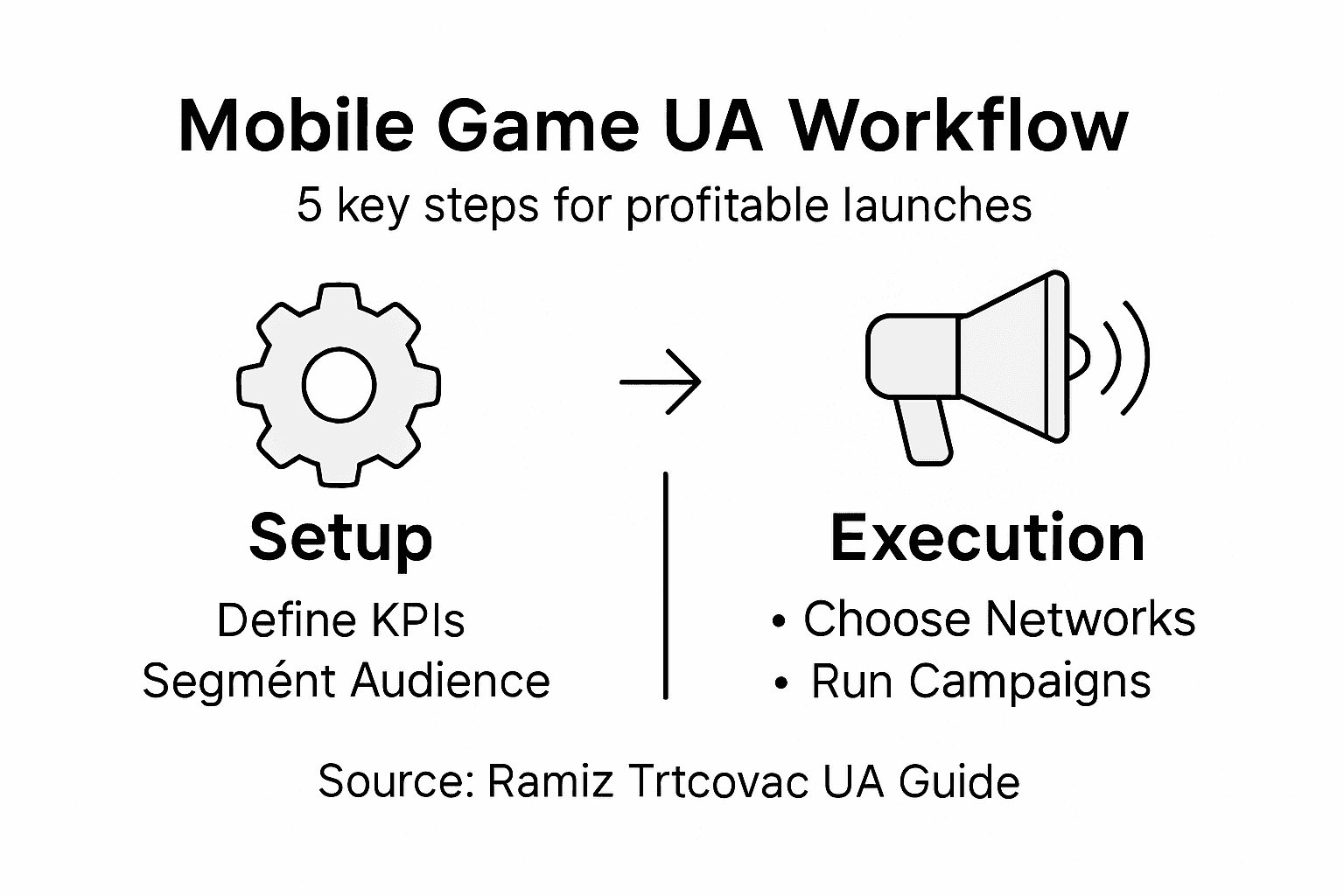
- Step 1: Define Profitable KPIs And Tracking Setup
- Step 2: Segment And Prepare High-Value Audiences
- Step 3: Select And Configure Optimal Ad Networks
- Step 4: Launch And Coordinate Multi-Channel Campaigns
- Step 5: Analyze Results And Iterate For Improvement
Quick Summary
| Key Point | Explanation |
|---|---|
| 1. Define actionable KPIs | Establish key performance indicators tied to financial goals for successful user acquisition tracking. |
| 2. Segment target audiences | Use audience segmentation to create targeted marketing strategies based on demographics and behaviors. |
| 3. Choose effective ad networks | Select ad networks based on global reach, targeting, performance tracking, and cost efficiency. |
| 4. Launch coordinated campaigns | Implement multi-channel marketing with consistent messaging to maximize reach and engagement. |
| 5. Analyze and optimize data | Regularly review campaign performance to identify areas for improvement and adapt strategies accordingly. |
Step 1: Define profitable KPIs and tracking setup
Defining profitable key performance indicators (KPIs) and establishing a robust tracking system is crucial for mobile game user acquisition success. In this section, you’ll learn how to select meaningful metrics that directly connect to your game’s financial and engagement objectives.
Starting with financial performance metrics, focus on indicators that reveal your campaign’s profitability. Performance tracking methodologies suggest prioritizing metrics like:
- Return on Ad Spend (ROAS): Measures revenue generated per advertising dollar
- Customer Acquisition Cost (CAC): Total expense to acquire a single user
- Lifetime Value (LTV): Projected total revenue from an average player
- Retention Rate: Percentage of users continuing to engage with your game
To implement effective KPI tracking, map out your specific objectives and identify quantifiable metrics that align with those goals. KPI monitoring systems recommend creating a structured approach that includes:
Here’s a quick reference for interpreting common mobile game KPIs and their business impact:
| KPI Metric | Indicates | Strategic Impact |
|---|---|---|
| ROAS | Revenue per ad dollar | Evaluates ad campaign profitability |
| CAC | Cost to acquire one user | Controls budget allocation decisions |
| LTV | Projected user revenue | Supports long-term growth planning |
| Retention Rate | Ongoing engagement levels | Signals user loyalty and game value |
- Define clear, measurable objectives
- Select relevant performance indicators
- Establish consistent measurement methods
- Create regular reporting schedules
- Implement ongoing performance reviews
Successful KPI tracking transforms raw data into actionable insights that drive strategic user acquisition decisions.
Pro tip: Develop a tracking dashboard that consolidates all key metrics, allowing real-time performance visualization and rapid strategic adjustments.
Step 2: Segment and prepare high-value audiences
Audience segmentation transforms your mobile game user acquisition strategy from broad targeting to precision-driven marketing. In this step, you’ll learn how to break down your potential user base into targeted groups that maximize engagement and conversion potential.
Audience segmentation techniques enable you to create laser-focused marketing approaches by dividing users based on critical characteristics. Key segmentation dimensions include:
- Demographic Attributes: Age, gender, location, income level
- Behavioral Patterns: Gaming preferences, spending habits, play frequency
- Psychographic Indicators: Motivation types, gaming skill levels, genre interests
- Technological Profiles: Device types, operating systems, network connections
Firebase audience creation strategies recommend developing dynamic segmentation models that adapt to changing user behaviors. To build effective segments, follow these strategic steps:

Below is a summary of audience segmentation dimensions and how they shape acquisition strategy:
| Segmentation Type | What It Defines | Marketing Value |
|---|---|---|
| Demographic | Age, gender, location | Enables tailored messaging |
| Behavioral | In-app actions, spending | Pinpoints likely converters |
| Psychographic | Motivations and preferences | Creates deep personalization |
| Technological | Devices, OS, connectivity | Optimizes ad delivery |
- Collect comprehensive user data
- Identify meaningful segmentation criteria
- Create distinct user personas
- Develop targeted marketing messages
- Continuously refine audience parameters
Effective audience segmentation is not about creating more groups, but about understanding the unique characteristics that drive user engagement and conversion.
Pro tip: Implement a rolling segmentation model that automatically updates user classifications based on real-time behavioral data and interaction patterns.
Step 3: Select and configure optimal ad networks
Selecting the right ad networks can make or break your mobile game’s user acquisition strategy. In this crucial step, you’ll learn how to strategically choose and configure ad networks that deliver high-quality users while maximizing your return on investment.
Strategic network selection approaches emphasize the importance of evaluating networks across multiple critical dimensions. Key considerations for ad network selection include:
- Global Reach: Coverage across different geographic markets
- Targeting Capabilities: Precision of user demographic and interest-based targeting
- Performance Tracking: Quality of analytics and conversion measurement
- Cost Efficiency: Competitive pricing and flexible bidding options
- Privacy Compliance: Adherence to data protection regulations
Network Configuration Steps:
- Research top mobile game advertising platforms
- Compare network performance metrics
- Conduct small-scale test campaigns
- Analyze initial user acquisition results
- Optimize and scale successful channels
Successful ad network selection is about finding the right balance between reach, precision, and cost-effectiveness.
Pro tip: Develop a multi-network strategy that allows you to diversify user acquisition channels and mitigate risk from potential performance fluctuations.
Step 4: Launch and coordinate multi-channel campaigns
Launching a successful multi-channel campaign requires precision, strategic planning, and seamless coordination across different marketing platforms. Your goal is to create a unified user acquisition approach that maximizes reach and engagement while maintaining consistent messaging.
Multi-channel marketing strategies emphasize the importance of integrating diverse communication channels. Key elements of an effective multi-channel campaign include:
- Cross-Platform Consistency: Ensure uniform messaging across all channels
- Audience Targeting: Customize content for specific platform demographics
- Performance Tracking: Monitor engagement metrics for each channel
- Adaptive Messaging: Tailor communication style to platform requirements
- Budget Allocation: Distribute resources strategically across channels
Campaign Coordination Process:
- Define overall campaign objectives
- Map user journeys across different platforms
- Create platform-specific creative assets
- Implement integrated tracking mechanisms
- Establish real-time performance monitoring
Successful multi-channel campaigns transform fragmented marketing efforts into a cohesive, high-performing user acquisition ecosystem.
Pro tip: Use centralized campaign management tools that provide unified analytics and enable rapid cross-channel optimization and strategy adjustments.
Step 5: Analyze results and iterate for improvement
Successful user acquisition isn’t a one-time event but a continuous improvement process. This final step focuses on transforming raw campaign data into strategic insights that will refine and optimize your mobile game’s user acquisition workflow.
Continuous improvement practices emphasize systematic performance evaluation. Key metrics and analysis dimensions include:
- User Acquisition Cost: Detailed breakdown of spending per acquired user
- Retention Rates: Percentage of users remaining active after initial install
- Conversion Performance: Tracking user progression through acquisition funnel
- Channel Effectiveness: Comparative analysis of different marketing platforms
- Demographic Insights: Understanding user segments driving highest value
Performance Analysis Process:
- Aggregate data from all tracking systems
- Normalize and clean collected performance metrics
- Compare results against initial campaign objectives
- Identify significant patterns and anomalies
- Develop actionable optimization recommendations
Strategic iteration transforms performance data from passive metrics into dynamic growth opportunities.
Pro tip: Implement a standardized monthly review process that automatically flags significant performance deviations and suggests potential optimization strategies.
Unlock Your Mobile Game’s True Profit Potential with Expert UA Strategies
Mastering mobile game user acquisition involves overcoming challenges like defining profitable KPIs, precise audience segmentation, selecting optimal ad networks, and executing multi-channel campaigns effectively. This article highlights common pain points such as ensuring accurate performance tracking, targeting high-value users, and making data-driven decisions to maximize return on ad spend.
At Ramiz Trtovac, we specialize in transforming these complex challenges into clear growth opportunities with proven consulting and educational solutions. Benefit from experience leading large-scale campaigns and deep knowledge of ad network optimization. Our tailored guidance helps you implement actionable KPI frameworks, sharpen audience segments, and scale your campaigns profitably.
Ready to break through user acquisition roadblocks and launch with confidence? Explore our resources and expert insights at Ramiz Trtovac’s official website and start turning your mobile game launches into successful, high-ROI ventures.

Take the first step toward mastering your mobile game UA workflow today. Visit Ramiz Trtovac to access expert consulting, educational materials, and personalized strategies that help you track smarter, target sharper, and scale faster.
Frequently Asked Questions
How can I define profitable KPIs for my mobile game user acquisition?
To define profitable KPIs, focus on metrics like Return on Ad Spend (ROAS), Customer Acquisition Cost (CAC), and Lifetime Value (LTV). Start by mapping your financial and engagement objectives, then select relevant indicators that directly align with those goals.
What are the best strategies for audience segmentation in mobile game marketing?
The best strategies for audience segmentation include categorizing users based on demographics, behavioral patterns, psychographic indicators, and technological profiles. Collect as much relevant user data as possible, identify key characteristics, and create distinct user personas to drive targeted marketing efforts.
How do I select the right ad networks for my mobile game campaigns?
To select the right ad networks, evaluate options based on their reach, targeting capabilities, performance tracking, cost efficiency, and privacy compliance. Research various networks, compare their performance metrics, and conduct small-scale test campaigns to identify the most effective channels for your user acquisition goals.
What steps should I take to launch a coordinated multi-channel user acquisition campaign?
To launch a coordinated multi-channel campaign, ensure cross-platform messaging consistency and customize content for specific platform audiences. Map user journeys across platforms, create tailored creative assets, and establish integrated performance tracking to optimize your marketing efforts.
How can I effectively analyze user acquisition results and iterate for improvement?
To analyze user acquisition results, aggregate data from all tracking systems and compare those results against your initial campaign objectives. Focus on key metrics such as user acquisition cost and retention rates, and implement a standardized monthly review process to identify patterns and suggest actionable optimizations.
What types of metrics should I focus on for ongoing mobile game performance evaluation?
Focus on metrics such as User Acquisition Cost, Retention Rates, Conversion Performance, and Channel Effectiveness for ongoing evaluation. Set a clear performance benchmark and compare data regularly to ensure your marketing efforts are aligned with user engagement and revenue generation goals.
Recommended
- Ramiz Trtovac: User Acquisition Mobile Games Expert
- The Importance of User Acquisition in Mobile Gaming: A Simplified Guide – Ramiz Trtovac
- Top 5 Mobile Game Marketing Strategies for 2024
- Crafting Engaging Ad Creatives for Hyper-Casual Games
Article generated by BabyLoveGrowth