Every mobile game studio faces tough decisions when trying to grow in markets where player attention feels impossible to hold. With user acquisition costs on the rise and competition intensifying in regions like Southeast Asia, the old ways of reaching players just do not work anymore. Today’s mobile game marketing depends on a blend of precision targeting, creative ad strategies, and deep analytics to find lasting growth and profitability, helping studios adapt before falling behind.
Table of Contents
- What Is Mobile Game Marketing Today?
- User Acquisition Channels and Strategies
- Key Elements Of A Winning Campaign
- Monetization, Retention, And Measuring Success
- Challenges, Costs, And Common Mistakes
Key Takeaways
| Point | Details |
|---|---|
| Modern Approach to Marketing | Mobile game marketing is now data-driven, focusing on precision targeting and creative user engagement strategies. |
| Multi-Channel User Acquisition | Successful studios utilize various platforms, including social media and influencer partnerships, for effective user acquisition. |
| Holistic Campaign Development | Winning campaigns align marketing, product development, and analytics to enhance user acquisition and long-term retention. |
| Complex Monetization Strategies | Effective monetization requires a balance between in-app purchases, advertising, and maintaining player satisfaction, backed by data analytics. |
What Is Mobile Game Marketing Today?
Mobile game marketing has dramatically evolved from simple advertising into a sophisticated, data-driven ecosystem designed to attract, engage, and retain players in an increasingly competitive global marketplace. Unlike traditional marketing approaches, modern mobile game marketing requires a nuanced understanding of digital platforms, user behavior, and advanced targeting strategies.
The contemporary landscape of mobile game marketing is characterized by several critical components:
- Precision User Acquisition: Targeting specific player demographics through advanced algorithmic matching
- Creative Ad Strategies: Developing engaging, platform-specific promotional content
- Multi-Channel Approaches: Leveraging social media, influencer partnerships, and cross-platform advertising
- Data Analytics: Using sophisticated tracking and performance measurement tools
Recent industry research highlights the complexity of this environment. Global mobile game advertising trends demonstrate that successful marketing now requires a comprehensive strategy that adapts to rapidly changing technological and privacy landscapes. The most successful studios recognize that marketing is no longer about broad reach, but about precision targeting and compelling user experiences.
Understanding this ecosystem means recognizing that mobile game marketing isn’t just about attracting players—it’s about creating sustainable engagement. Studios must develop sophisticated monetization strategies that balance in-app purchases, advertising revenue, and player satisfaction. This requires deep insights into player psychology, platform-specific algorithms, and continuously evolving digital marketing techniques.
Pro tip: Invest in creative, data-driven marketing approaches that focus on player experience and targeted acquisition rather than generic, broad-spectrum advertising strategies.
User Acquisition Channels and Strategies
Modern mobile game marketing demands a sophisticated, multi-channel approach to user acquisition that goes far beyond traditional advertising methods. Studios must now navigate a complex digital ecosystem where precision targeting and creative strategies determine success.
Key user acquisition channels include:
- Social Media Advertising: Leveraging platforms like Facebook, TikTok, and Instagram
- Video Marketing: Utilizing YouTube, Twitch, and gaming-specific content platforms
- In-App Advertising: Strategically placing ads within related mobile games
- Programmatic Ad Buying: Using automated technologies for precise audience targeting
- Influencer Partnerships: Collaborating with gaming content creators
Mobile game marketing strategies reveal that successful user acquisition now requires continuous creative variation to prevent ad fatigue and maintain user engagement. This means developing multiple ad variations, testing different messaging, and adapting content to specific platform algorithms and audience preferences.
Regional and platform-specific nuances play a critical role in acquisition effectiveness. Android markets, particularly in emerging economies, demonstrate different user behavior compared to iOS ecosystems. Successful studios develop granular, data-driven strategies that account for these variations, using advanced analytics to optimize targeting, reduce acquisition costs, and improve overall campaign performance.

To better understand the complexity of user acquisition, here is a comparison of major channels in mobile game marketing:
| Channel Type | Typical Use Case | Key Benefit |
|---|---|---|
| Social Media Ads | Broad outreach, targeting | High engagement potential |
| Video Marketing | Gameplay showcasing | Builds trust through demos |
| In-App Advertising | Relevant player targeting | Converts active gamers |
| Influencer Partnerships | Niche audience access | Enhanced authenticity |
| Programmatic Buying | Automated campaign management | Precision and scale targeting |
Pro tip: Implement a robust A/B testing framework for your user acquisition campaigns, continuously experimenting with ad creative, targeting parameters, and messaging to identify the most efficient acquisition strategies.
Key Elements of a Winning Campaign
Developing a successful mobile game marketing campaign requires a strategic approach that blends data-driven insights, creative innovation, and precise targeting. Modern studios must go beyond traditional advertising methods to create campaigns that not only attract users but also drive long-term engagement and revenue.
Key elements of a winning campaign include:
- Clear Goal Setting: Defining specific, measurable objectives
- Audience Targeting: Identifying and segmenting high-value player profiles
- Creative Diversity: Developing multiple ad formats and variations
- Performance Tracking: Implementing robust analytics and KPI monitoring
- Continuous Optimization: Iterative improvements based on real-time data
Marketing performance strategies emphasize the critical importance of aligning marketing efforts across multiple teams. This means creating a holistic approach where product development, marketing, and financial teams work in concert to maximize user acquisition and retention.
Successful campaigns leverage advanced technologies like AI and sophisticated data analytics to create personalized user experiences. Studios must develop adaptive strategies that can quickly respond to performance signals, using sophisticated targeting techniques that go beyond traditional demographic segmentation. This requires a deep understanding of user behavior, platform-specific nuances, and the ability to create culturally relevant, engaging content that resonates with specific player segments.
Pro tip: Establish a cross-functional team that breaks down silos between marketing, product, and analytics departments to create more integrated and responsive marketing strategies.
Monetization, Retention, and Measuring Success
Successful mobile game studios recognize that monetization is far more complex than simply generating revenue. It requires a sophisticated, multi-dimensional approach that balances player experience with strategic financial objectives.
Key monetization and retention strategies include:
- Mixed Revenue Models: Combining in-app purchases with targeted advertising
- Personalized Player Experiences: Creating dynamic content that keeps users engaged
- Segmented Pricing Strategies: Developing tiered monetization approaches
- Continuous Content Updates: Maintaining player interest through fresh experiences
- Reward Systems: Implementing progression mechanics that encourage spending
Mobile game monetization techniques demonstrate that successful studios leverage sophisticated data analytics to optimize revenue streams. This means developing nuanced understanding of user behavior, creating personalized engagement pathways, and continuously adapting monetization strategies based on real-time performance metrics.
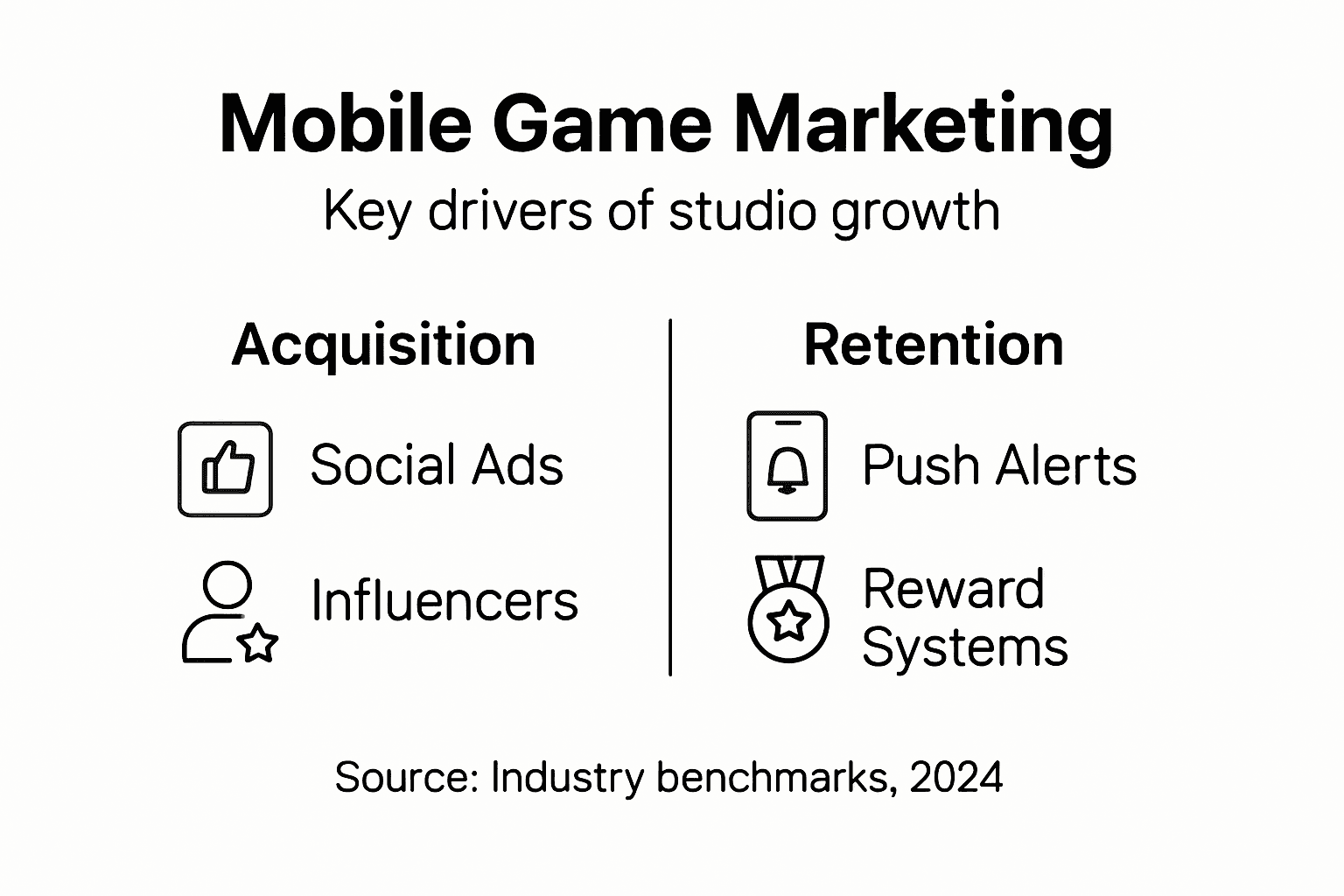
Measuring success goes beyond traditional revenue indicators. Studios must develop comprehensive performance frameworks that track multiple interconnected metrics, including customer acquisition cost, retention rates, average revenue per user, and lifetime value. These metrics provide a holistic view of a game’s financial health and potential for sustainable growth, enabling studios to make data-driven decisions about game design, marketing investment, and long-term strategic planning.
For a quick overview, this table summarizes essential mobile game monetization metrics and what they reveal:
| Metric | What It Measures | Importance to Studio |
|---|---|---|
| Customer Acquisition Cost | Efficiency of spending | Controls marketing ROI |
| Retention Rate | User engagement | Predicts long-term loyalty |
| Lifetime Value (LTV) | Revenue per user | Maximizes monetization insight |
| Average Revenue Per User | Monetization effectiveness | Identifies pricing strategy strength |
| Churn Rate | Player departure pace | Signals content or value issues |
Pro tip: Implement a robust analytics dashboard that tracks at least five key performance indicators simultaneously, allowing for rapid insight generation and strategic pivots.
Challenges, Costs, and Common Mistakes
Mobile game marketing presents a complex landscape fraught with potential pitfalls that can quickly drain studio resources and derail growth strategies. Understanding these challenges is crucial for studios seeking sustainable success in an increasingly competitive market.
Common challenges and costly mistakes include:
- Inefficient Targeting: Broad, untargeted marketing campaigns
- Misaligned Team Strategies: Lack of coordination between marketing and product development
- Inadequate Analytics: Poor tracking and performance measurement
- Privacy Constraint Limitations: Difficulties with user tracking and attribution
- Oversimplified Monetization: Neglecting nuanced revenue generation approaches
Mobile game marketing performance reveals that high costs often stem from fundamental strategic misalignments. Studios frequently overspend on marketing channels without understanding their true return on investment, failing to develop sophisticated, data-driven approaches that connect user acquisition with long-term revenue potential.
Privacy regulations and technological changes have dramatically transformed the marketing landscape, making traditional acquisition strategies increasingly ineffective. Studios must now develop more sophisticated, privacy-compliant approaches that rely on advanced data strategies, creative targeting techniques, and integrated cross-functional teams. This requires significant investment in analytics capabilities, creative talent, and flexible marketing models that can adapt to rapidly changing technological and regulatory environments.
Pro tip: Develop a cross-functional team that combines marketing, product, and analytics expertise to create more integrated and cost-effective acquisition strategies.
Elevate Your Mobile Game Marketing with Expert Guidance
Mobile game studios face complex challenges like inefficient targeting, fragmented team strategies, and navigating privacy constraints that can drain resources and stall growth. This article highlights the importance of data-driven, precision user acquisition, creative campaign diversity, and integrated analytics to build sustainable player engagement and maximize monetization. If you recognize these hurdles and want to transform your marketing approach with proven methods and strategic insights, you are in the right place.
Discover how partnering with an experienced consultant can help you align your marketing, product, and analytics teams for powerful results. At ramiztrtovac.com, Ramiz Trtovac brings deep expertise leading large-scale user acquisition initiatives across multiple ad networks and guiding studios like Two Desperados and GameBiz Consulting. Explore insightful blog articles and consulting services designed to help you craft data-driven campaigns, optimize your monetization strategy, and scale profitably. Don’t let common mistakes hold you back. Take action now to build a winning mobile game marketing engine that drives real studio growth.
Frequently Asked Questions
What are the key components of modern mobile game marketing?
Modern mobile game marketing includes precision user acquisition, creative ad strategies, multi-channel approaches, and data analytics to optimize engagement and retention.
How can user acquisition strategies improve mobile game marketing outcomes?
User acquisition strategies, such as social media advertising, video marketing, and influencer partnerships, enhance engagement by targeting specific player demographics and adapting content to their preferences.
What are the essential elements of a successful mobile game marketing campaign?
Successful campaigns consist of clear goal setting, audience targeting, creative diversity, performance tracking, and continuous optimization based on real-time data analysis.
How do studios measure the success of their mobile game marketing efforts?
Studios measure success using metrics such as customer acquisition cost, retention rates, average revenue per user, and lifetime value to gain insights into financial health and growth potential.
Recommended
- Top 5 Mobile Game Marketing Strategies for 2024
- Mastering Facebook Ads for Mobile Games by Ramiz Trtovac
- Crafting Engaging Ad Creatives for Hyper-Casual Games
- The Importance of User Acquisition in Mobile Gaming: A Simplified Guide – Ramiz Trtovac