
User acquisition costs are rising and complex in 2026. Choosing the right UA type is essential to maximize ROI and retention. This article provides a clear decision framework tailored to mobile games, helping you evaluate cost efficiency, quality, scalability, and privacy impact to optimize your acquisition strategy.
Table of Contents
- How to Choose the Right User Acquisition Types for Your Mobile Game
- Paid User Acquisition: Platforms, Costs, and Automation in 2026
- Organic User Acquisition: App Store Optimization and Content Marketing
- Influencer Marketing and Partnerships: Building Trust and Engagement
- Rewarded User Acquisition: Incentives that Drive Quality and Retention
- Cross-Promotion Acquisition: Leveraging Your Portfolio for Cost Savings
- Comparing User Acquisition Types: A Data-Driven Overview
- Situational Recommendations: Choosing UA Types Based on Your Game’s Needs
- Boost Your Mobile Game Growth with Expert User Acquisition Strategies
Key Takeaways
| Point | Details |
|---|---|
| Paid UA scales fastest but costs $1.5 to $5+ per install | Delivers immediate volume but requires quality focus |
| Organic UA drives ~70% of discoveries at near-zero cost | ASO and content marketing provide sustainable growth |
| Rewarded UA improves retention and ROAS vs paid | Incentivized installs deliver higher-quality users |
| Cross-promotion cuts costs by 20 to 40% using existing users | Best for multi-title studios seeking portfolio synergy |
| Influencer marketing boosts engagement and brand trust | Authentic partnerships drive conversion and retention |
How to Choose the Right User Acquisition Types for Your Mobile Game
Evaluating UA types requires a structured approach. You need to balance cost, user quality, scalability, genre fit, and privacy constraints to build campaigns that drive profitability.
Start with cost efficiency. Prioritize channels that deliver CPI under $5 in North America, especially if you’re working with constrained budgets. Paid UA can quickly exceed this threshold without careful optimization.
Next, assess user quality through retention and lifetime value metrics. High install volume means nothing if users churn within 24 hours. Look for channels that deliver Day 7 retention above 20% and strong ROAS.
Consider scalability needs. Some UA types ramp quickly while others build slowly but sustainably. Your growth targets dictate which channels to prioritize.
Align UA types to your game’s genre and audience demographics. Casual puzzle games thrive on organic and paid UA, while competitive multiplayer titles benefit from influencer and community-driven acquisition. Implementing audience targeting strategies ensures you reach the right players.
Finally, adapt to privacy changes that limit granular targeting. iOS and Android restrictions have shifted UA toward creative quality and broad interest targeting rather than narrow behavioral signals.
Pro Tip: Test multiple UA types simultaneously at small scale before committing budget. Compare performance across CPI, retention, and ROAS to identify your winning mix.
Paid User Acquisition: Platforms, Costs, and Automation in 2026
Paid UA remains the fastest path to user volume. Major platforms include TikTok, Meta, Google, Unity, and AppLovin, each offering unique audience access and targeting capabilities.
CPI varies significantly by platform, device, app category, and campaign type. TikTok delivers lower CPIs for casual games but higher costs for hardcore titles. Meta excels at broad reach with strong creative optimization tools. Google and Meta ad platforms each offer distinct advantages depending on your game genre and audience.

AI-powered automation has transformed paid UA in 2026. Dynamic bidding algorithms optimize spend in real time, while automated creative testing surfaces winning ad variants faster than manual approaches. These tools increase ROI by 15 to 30% when implemented correctly.
Privacy changes have reduced targeting precision, making creative quality more important than ever. You can no longer rely on granular behavioral data to find high-value users. Instead, compelling ad creatives must capture attention and communicate value within three seconds.
Paid UA is vital for fast user volume but requires constant quality monitoring. Track retention cohorts daily and pause campaigns that deliver users with sub-15% Day 1 retention. Following proven paid user acquisition workflows helps you maintain campaign efficiency as you scale.
Pro Tip: Allocate 20% of your paid budget to creative testing. Fresh ad variants prevent fatigue and sustain campaign performance over time.
Organic User Acquisition: App Store Optimization and Content Marketing
Organic UA drives sustainable, cost-effective growth. ASO accounts for the majority of app discovery, delivering installs at near-zero marginal cost once optimized.
Visual appeal and localization dramatically improve conversion rates. High-quality screenshots, compelling app previews, and localized descriptions increase install rates by 25 to 40% across markets.
A/B testing app store listings optimizes download performance. Test icon variations, feature highlights, and keyword strategies to identify what resonates with your target audience. Small improvements compound over time.
Organic UA scales slower than paid channels but provides essential baseline installs. It also boosts the effectiveness of paid campaigns by improving overall discoverability and brand recognition.
Content marketing extends organic reach beyond app stores. Tutorial videos, gameplay streams, and community engagement build audience interest before users ever visit your listing. Exploring diverse organic user acquisition strategies ensures you capture users across multiple touchpoints.
Organic channels require patience but deliver compounding returns. Invest early in ASO fundamentals to build a foundation that supports all other UA efforts.
Influencer Marketing and Partnerships: Building Trust and Engagement
Influencer-driven acquisition leverages authentic social connections to drive installs and engagement. Unlike traditional ads, influencer content feels native to platforms and benefits from existing audience trust.
Authentic partnerships improve conversion rates and engagement. When influencers genuinely enjoy your game, their enthusiasm translates into higher-quality users who stick around longer.
ROI varies depending on niche, campaign type, and influencer audience fit. Micro-influencers with 10,000 to 100,000 followers often deliver better cost efficiency than celebrity partnerships, especially for targeted game genres.
Influencer marketing excels at building community and brand awareness. It creates social proof that extends beyond individual campaigns, driving organic interest and word-of-mouth growth.
Consider aligning influencer type closely with game audience demographics. A puzzle game thrives with family-friendly lifestyle influencers, while a battle royale needs competitive gaming creators. Implementing effective user acquisition influencer strategies helps you identify the right partners for your game.
Influencers extend social trust, driving higher retention than cold paid ads. Users acquired through influencer campaigns often exhibit 20 to 30% better Day 30 retention.
Rewarded User Acquisition: Incentives that Drive Quality and Retention
Rewarded UA incentivizes users to install or engage with your game in exchange for in-app currency, items, or other benefits. This model has overcome early skepticism about user quality through improved targeting and measurement.
Users receive incentives for installs or engagement actions. The key is ensuring these users continue playing beyond the initial reward redemption. Modern rewarded networks optimize for post-install engagement, not just installs.
Rewarded UA delivers better retention and ROAS than standard paid channels, especially for monetization-driven games. These users arrive with clear intent and often explore the game more thoroughly than cold traffic.
This approach is highly effective in cross-platform user acquisition campaigns. Players already engaged in one game are primed to try another, creating natural discovery paths within gaming ecosystems.
Rewarded UA can complement paid channels to balance volume with quality. Allocate 15 to 25% of your UA budget to rewarded networks as a quality hedge against lower-retention paid traffic. Understanding rewarded user acquisition insights helps you implement this channel effectively.
The incentivized nature of this channel makes creative messaging critical. Clearly communicate your game’s core value proposition to ensure users stay engaged after claiming rewards.
Cross-Promotion Acquisition: Leveraging Your Portfolio for Cost Savings
Cross-promotion within multi-title studios is a highly cost-effective UA tactic. By promoting new games to your existing user base, you eliminate paid media costs and leverage established trust.
Cross-promotion reduces acquisition costs by 20 to 40% compared to external paid UA. You’re essentially converting engaged users across your portfolio rather than acquiring cold traffic.
No paid media costs per install are involved. The only expenses are creative production and opportunity cost from promotional placements within existing games.
This approach is best suited for studios with multiple game titles. Single-title studios can explore partnerships with complementary games to access similar benefits.
Cross-promotion helps increase lifetime value by cross-engaging users across games. Players who enjoy multiple titles in your portfolio spend more and stick around longer.
Limited external scale is the primary drawback. You can only promote to your existing user base, which caps absolute install volume. However, the efficiency gains make this channel essential for portfolio studios.
| Metric | Cross-Promotion | Paid UA |
|---|---|---|
| Cost per Install | $0.10 to $0.50 | $1.50 to $5.00+ |
| User Quality | High (pre-qualified) | Variable |
| Scale Potential | Limited to portfolio | Unlimited |
| Setup Time | Days | Weeks |
Comparing User Acquisition Types: A Data-Driven Overview
Each UA type varies markedly in cost, quality, and scalability, requiring careful choice to match game goals. Understanding these tradeoffs enables smarter budget allocation.
Paid UA offers the highest CPI at $1.5 to $5+ but delivers the fastest scale. You can ramp from zero to thousands of daily installs within weeks. However, user quality requires constant monitoring.
Organic UA operates at near-zero marginal cost with slow but steady growth. It provides essential baseline installs and improves the efficiency of all other channels through enhanced discoverability.
Rewarded UA sits between paid and organic on cost but delivers higher retention and better ROAS than standard paid channels. It’s particularly effective for games with strong monetization mechanics.
Cross-promotion offers the lowest cost with limited external scale. For multi-title studios, it’s an essential component of any UA mix, providing high-quality installs at minimal expense.
Influencer marketing enhances engagement and trust with variable ROI. When executed well, it drives users who engage deeply and spread word-of-mouth awareness.
| UA Type | CPI Range | Scale Speed | Best For |
|---|---|---|---|
| Paid | $1.50 to $5.00+ | Very Fast | Rapid growth, volume |
| Organic | Near zero | Slow | Sustainable baseline |
| Rewarded | $0.80 to $2.50 | Moderate | Quality, monetization |
| Cross-Promotion | $0.10 to $0.50 | Limited | Portfolio studios |
| Influencer | $1.00 to $4.00 | Moderate | Brand building, trust |
Exploring detailed UA types comparison helps you understand which channels fit your studio’s needs. Optimizing CPA bidding and tracking LTV considerations ensures you maximize returns across all channels.
Situational Recommendations: Choosing UA Types Based on Your Game’s Needs
Your studio size, budget, game genre, and privacy context should dictate your UA mix. Here’s how to match channels to your situation:
-
Small studios with limited budgets should prioritize organic and influencer UA to maximize cost efficiency and build community before scaling paid campaigns.
-
Mid-size studios scaling rapidly benefit from a paid plus rewarded UA mix that balances volume with quality, ensuring sustainable unit economics as you grow.
-
Studios with multiple titles gain significant advantages from cross-promotion for cost-effective installs and increased portfolio lifetime value.
-
Retention-critical genres like RPGs and strategy games need rewarded UA and influencer channels to acquire high-quality users who engage long-term.
-
Privacy-sensitive campaigns should focus on creative quality and broad targeting over narrow behavioral data, as iOS and Android restrictions limit precise audience selection.
Adapting to UA market shifts ensures your strategy remains effective as platforms and regulations evolve.
Pro Tip: Build a diversified UA portfolio rather than relying on a single channel. Allocate 50 to 60% to your primary channel and distribute the remainder across complementary types to reduce platform risk.
Boost Your Mobile Game Growth with Expert User Acquisition Strategies
Navigating multiple UA types requires experience and constant optimization. Expert guidance helps you implement cost-effective campaigns that deliver measurable results.
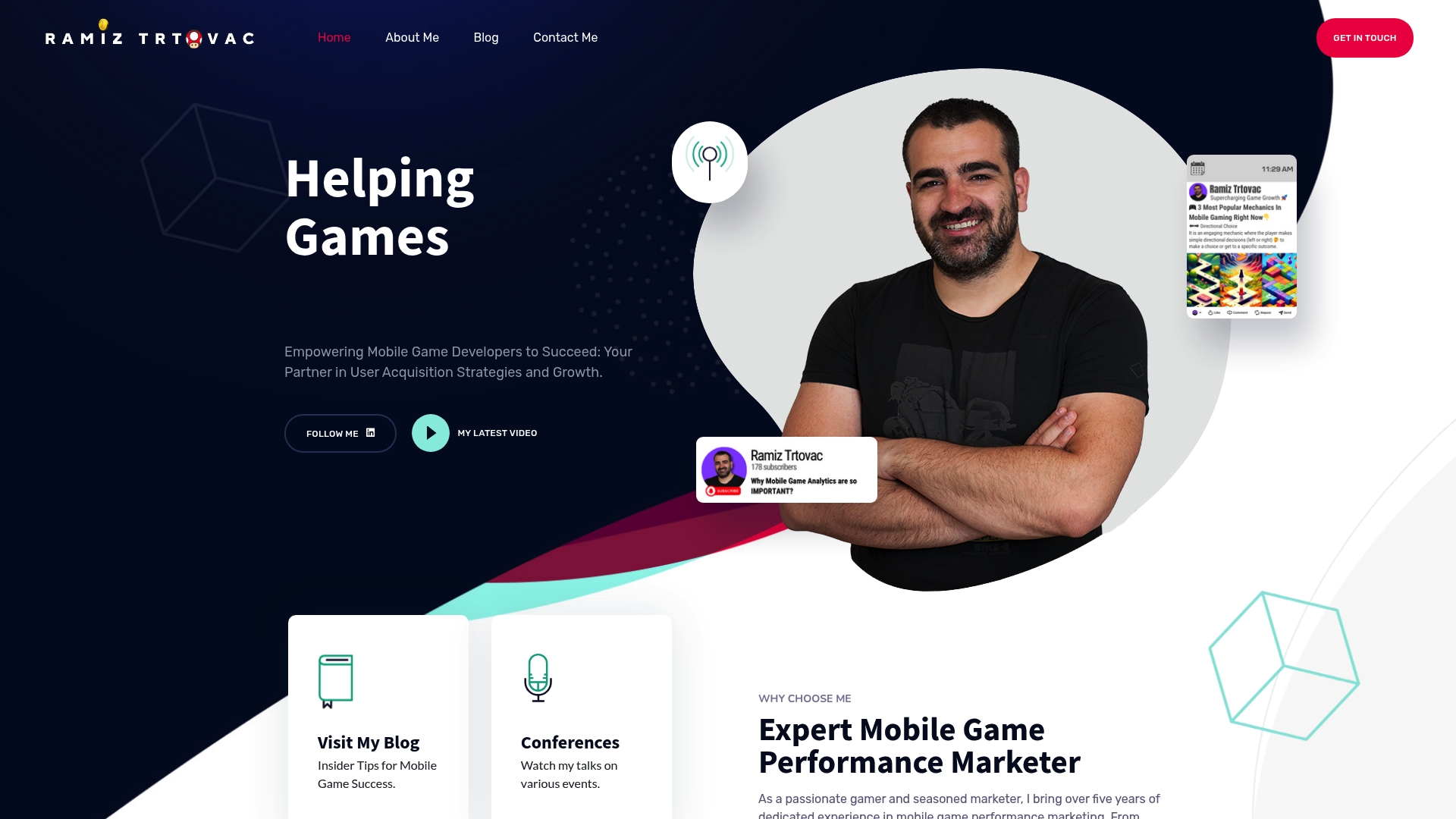
Working with Ramiz Trtovac gives you access to proven frameworks for evaluating and executing UA strategies across paid, organic, rewarded, and influencer channels. You’ll learn how to balance cost, quality, and scale based on your specific game and studio context. Explore tailored mobile game marketing growth strategies to accelerate your results. Access ongoing insights through the user acquisition blog to stay ahead of industry shifts.
Frequently Asked Questions
What are the main types of user acquisition for mobile games?
Paid acquisition uses platform ads with a cost per install ranging from $1.50 to $5.00 or more. Organic relies on ASO and content marketing at near-zero marginal cost. Influencer marketing leverages social trust to drive engaged users. Rewarded UA incentivizes installs through in-game rewards. Cross-promotion uses existing user bases across multiple titles. Your choice depends on studio size, budget, privacy constraints, and game genre.
How can privacy changes in 2026 impact user acquisition strategies?
Privacy rules reduce behavioral data targeting accuracy, limiting your ability to reach narrow audience segments. UA campaigns should now leverage creative quality and broad interest targeting instead of granular user-level data. Adapting audience targeting adjustments helps you maintain performance despite these restrictions.
Which user acquisition type offers the best retention for mobile games?
Rewarded UA and influencer marketing drive higher-quality and longer-retained users compared to standard paid channels. These users arrive with intent or social trust, leading to deeper engagement. Paid UA tends to have faster scale but lower retention comparatively. Understanding rewarded UA retention benefits helps you prioritize quality over volume.
How can small studios with limited budgets optimize user acquisition?
Leverage organic channels through ASO and content marketing to build sustainable install volume. Partner with micro-influencers who offer cost-efficient access to engaged audiences. Avoid heavy upfront paid media costs until you’ve validated retention and monetization metrics. Exploring UA strategies for small studios provides actionable frameworks for budget-constrained growth.
Recommended
- 7 Key Types of User Acquisition Strategies for Mobile Games
- What Is User Acquisition and Why It Drives Mobile Game Growth
- What is User Acquisition for Mobile Games? – Ramiz Trtovac
- The Importance of User Acquisition in Mobile Gaming: A Simplified Guide – Ramiz Trtovac